
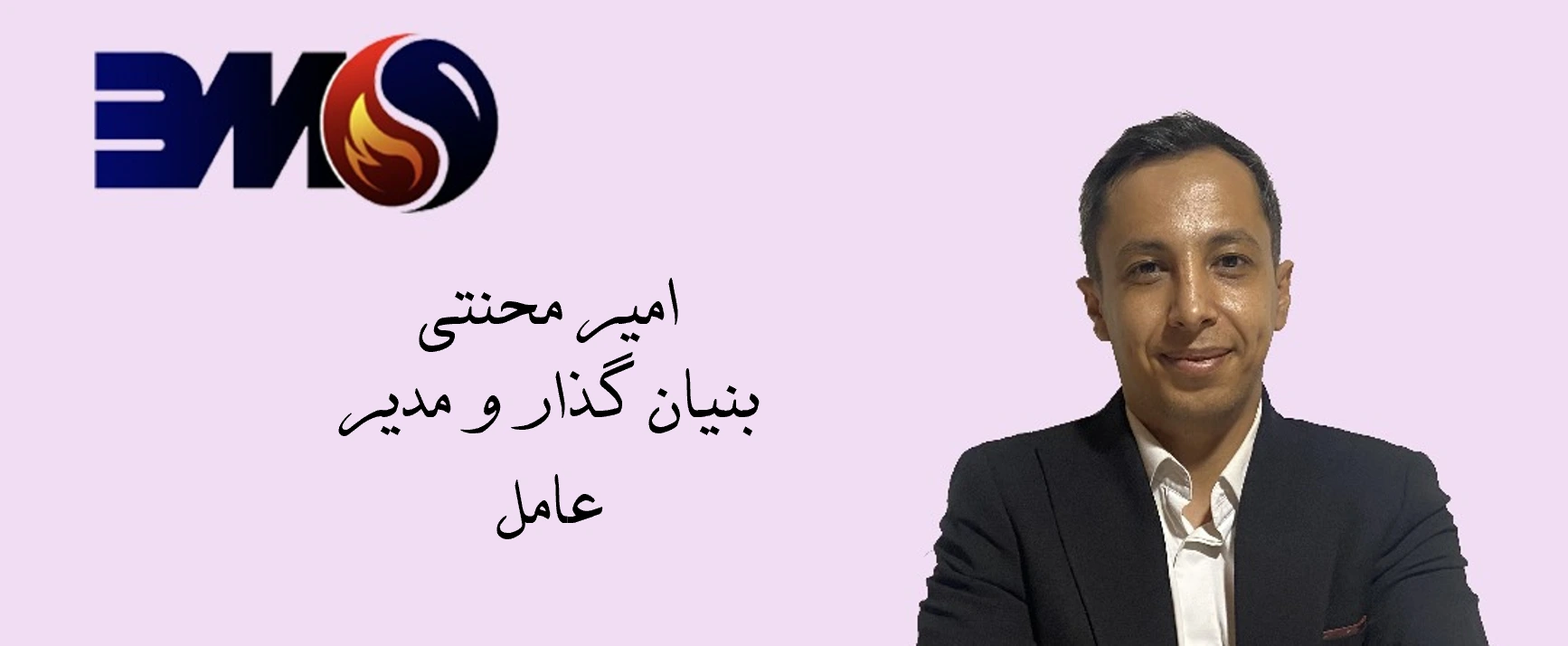
Exclusive Interview with Amir Mehanti, CEO of Barman Mehvar Spadana
|
Amir Mehanti: Success? Perhaps from the outside, it appears that way today. But we have weathered storms of obstacles, injustice, and days when we weren’t even sure if we would survive. Barman Mehvar Spadana was founded with a vision of smart automation for the country, but having a vision alone is not enough.
When we started, there was no funding, no support—just us, a world of ideas, and hope. There were days when even paying office rent was a struggle, when despair felt like a thick layer of grime on our company walls. But we learned to wipe it away rather than drown in the darkness.
When we developed our first intelligent system, people told us, “Why are you wasting your time? Only foreign companies can build such systems. No one will ever invest in you.” That only fueled our determination. We not only built the system but took it to a level that astonished everyone.
But the journey wasn’t without hardship. Even after obtaining rigorous approvals and certifications—after proving our system’s effectiveness—some people were seemingly unhappy with our success. Every day, there was a new obstacle, a bureaucratic game designed to slow us down.
We learned one thing: whenever someone tried to block our path, we found another way.
Industry 4.0 & Smart Automation: Driving Productivity and Competence
Reporter: You’ve previously discussed the role of smart automation in Industry 4.0. How does this impact the national economy?
Amir Mehanti: Industry 4.0 is, in essence, a digital revolution that optimizes industries on a massive scale. At Barman Mehvar Spadana, we firmly believe that smart automation is not just a tool—it is a necessity for economic survival and national growth.
🌐 Increased Productivity: Automation reduces production costs, minimizes waste, and exponentially enhances operational efficiency, resulting in greater profitability and sustainable economic growth.
🌐 Economic Security & Stability: When critical national sectors—such as energy and healthcare—rely on intelligent, locally developed systems, foreign sanctions and external dependencies lose their power to destabilize our economy. In this sense, smart automation acts as a protective shield.
🌐 Global Influence: Nations leading in smart technology gain leverage in international markets. If Iran takes the lead in industrial automation—particularly in energy, manufacturing, and healthcare—it can secure a stronger foothold in global trade and negotiations.
At Barman Mehvar Spadana, we believe smart automation isn’t a choice—it’s the path that shapes the future.
A System That Had to Be Built: Fighting Inefficiency with Technology
Reporter: Your smart monitoring and control system for CNG stations has been one of your most ambitious projects. Why did this initiative face such resistance?
Amir Mehanti: Because it was a national project. Because we were attempting to implement a system that many stakeholders either didn’t want or had vested interests in keeping things unchanged.
We developed a system capable of fully automating CNG stations, enhancing efficiency, reducing costs, and ensuring safety. This was exactly what the government had approved, and the public had already paid for it. So why wasn’t it implemented?
The reasons were clear. Importers of foreign systems didn’t want a domestic alternative. Those profiting from inefficiencies wanted nothing to change. And some government officials simply didn’t understand the project’s significance.
Not only did we have to build the technology, but we also had to fight for its implementation. We held countless meetings, submitted official documents, and provided extensive reports—yet decision-makers hesitated. Even after securing approvals and conducting a successful pilot run at the Domanturah Ponak station in Tehran, the national CNG project management stalled the decision-making process.
Sustaining Motivation Amid Challenges
Reporter: How did you keep your motivation alive through such adversity?
Amir Mehanti: Honestly, there were days when we wondered if it was even worth continuing. Days when hope flickered like a dying candle. But every time, we reminded ourselves why we started.
One of my closest colleagues, now like a brother to me, once said during one of our darkest days:
We have built something no one else in the country has. If we give up, this system will never see the light of day. If this project is going to fail, let it fail on its own—not because we abandoned it
That one sentence was enough. We decided not only to persist but to push forward stronger than ever.
Clinicians: A New Venture, A Lesson from the Past
Reporter: Beyond the CNG project, you’ve launched a new platform called Clinicians. Did your past experiences influence this venture?
Amir Mehanti: Absolutely. After experiencing the hurdles in the CNG project, we realized the importance of diversifying our efforts.
Clinicians is a digital platform transforming healthcare and aesthetic services. It allows users to browse, compare, book, and access medical services nationwide based on their needs and budgets. Additionally, it equips clinics with cutting-edge tools to optimize processes, reduce costs, and enhance patient experiences.
Unlike the CNG system, this time, we weren’t dependent on government decisions. Instead, we worked directly with real customers: doctors, clinic managers, and the public.
Looking Ahead: Hope, Technology, and Change
Reporter: Now that you have navigated these challenges, how do you envision the future?
Amir Mehanti: The future cannot be predicted, but it can be built—and we have chosen to build it. We will soon expand Clinicians, explore new automation solutions for homes, industries, and energy sectors, and most importantly, we have learned that nothing is impossible.
We have endured dark times—days when the only source of light was our laptops, where we wrote lines of code late into the night. But those lines of code have now become real-world solutions that will shape the future.
If we’ve learned anything, it’s this: never surrender. If you encounter a wall, climb over it or break it down—but never stop moving forward.
The Future: Technology, Development, and Economic Transformation
Reporter: Given the challenges, what is your long-term vision?
Amir Mehanti: We are not stopping. We have realized that success is not just about creating an outstanding product. Success is about having a resilience that no setback can break.
🚀 We will continue developing Clinicians and smart CNG stations while expanding into new domains such as intelligent infrastructure, industrial automation, and energy management.
🚀 We will integrate AI and data analytics into multiple industries across the nation.
🚀 We will introduce solutions that are not only competitive within Iran but also on the global stage.
Smart automation brings power. We firmly believe that by advancing indigenous technologies, we can fortify our economy against uncertainties and position Iran as a technological powerhouse in the region.
Final Thoughts: A Message from the CEO of Barman Mehvar Spadana
Reporter: Finally, do you have a message for officials, investors, or the public?
Amir Mehanti: 🤝 Trust in local technology. We have the capability to develop cutting-edge solutions, but success requires collaboration and support.
🤝 Investors, recognize the future. Our technologies are not just financially viable; they are transformative.
🤝 People, you are the true heroes. You have invested in these technologies through your trust. We are fighting for you—for security, efficiency, and a better tomorrow.